Resistance to Abrasions, High Temperature and Increased Lifespan With Thermal Barrier Coating
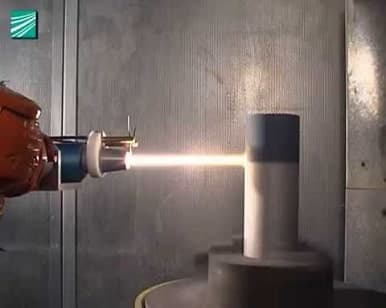
The global thermal barrier coatings market is valued at US$12.152 billion in 2020, with a CAGR of 4.09% predicted to raise US$16.092 billion by 2027.
Thermal barrier coatings are intended to protect metal structural components from extremely elevated temperatures, reducing stress and abrasion and extending the part's life. Thermal barriers incorporate several key components to provide such a high level of protection. Every coating comprises four distinct layers, with each layer contributing to the coating's protective thermal properties and allowing it to form a unique thermal barrier. These 100 m to 2 mm thick thermally shielding paints protect elements from large and sustained heat loads and can withstand a significant temperature gradient between the load-bearing alloying elements and the coating surface. As a result, these coatings can allow for higher operation conditions while restricting structural element thermal exposure, broadening part life by reducing oxidation and thermal fatigue. In some turbine implementations, TBCs, in conjunction with active film cooling, allow working fluid temperatures greater than the melting point of the metal airfoil. There is a major incentive to develop new and enhanced TBCs due to the increasing demand for more powerful engines operating at higher temperatures with better sturdiness and slimmer coatings to reduce parasitic mass for rotational motion components.
Components of Thermal Barrier Coating
A typical thermal coating consists of a metal layer sandwiched between two ceramic layers.
On the other hand, misaligned thermal expansion coefficients can jeopardise the bond where it abides by the substrate. A "bond coat" is sometimes used to aid adhesion between the metal substrate and the ceramic layer. These thermal barrier coatings are made up of four layers. The metal surface is the first component of the thermal coating. Thermal coatings tend to work well with mono or polycrystalline nickel or cobalt alloy blended with other components based on the intended end-product properties. The bond coat is the first layer of the coating; it is what allows the sealant to bond to the substrate and thus adhere to it. The bond coat is traditionally a metallic layer composed of a nano-structured ceramic-metallic matrix that abides the layer to the metal substrate and is important for activating the 2nd coating layer of thermally grown ceramic oxide when the coating is exposed to elevated temperatures. The composition of thermally grown oxides is catalysed when nanoparticles of aluminium oxides and nitrides are dispersed all across the bond coat. This ceramic layer is in charge of establishing a uniform, thermally protective shield by intervening as an oxygen diffuser, preventing the substrate from burning.
Coating Solution Market
Saint- Gobain Coating Solution- Saint-Gobain Coating Services produces a wide variety of thermal barrier coatings in EB-PVD, thermal spray powders and ingots. It can produce the best strategy to protect equipment, such as turbines, against high-temperature abrasion, erosion, oxidation, and wear by leveraging its competence in materials technology and process design. Most importantly, its product lines provide enhanced service durability in harsh environments.
- Saint-Gobain Thermal Spray Powder - Saint-Gobain produces a line of zirconia-based thermal spray powders for TBC that has low conductivity and a long protective layer lifespan. They have outstanding wear resistance for high-temperature implementations like combustion engines and gas turbines. The yttria zirconia powders produced by the company have very few contaminants and a strictly controlled particulate size and morphology. These properties result in high deposit performance while spraying and extensive coating life during use. They are highly resistant to shock, erosion, heat and rust in high-temperature areas due to their low thermal conductivity.
- Ingots for Thermal Barrier Coating- Saint-Gobain's ingots EB-PVD are made of yttria-stabilized zirconia or any customised developed TBC. Stringent quality assurance standards at the production stage are essential for unrivalled dependability. Dedicated manufacturing equipment guarantees that each ingot created has consistent density and morphology from lot to lot.
Hayden Thermal Spray Coating- HVOF is a high-velocity thermal spraying procedure that yields coatings with high bonding and abrasion resistance. It is frequently used in the petroleum and aerospace sectors to coat parts. Like a fighter jet plane's engine in the afterburner, the combustion process employs specifically designed valves to speed up the exhaust gases to supersonic velocities. The powdered coating material is added and ramped up toward the surface in the high-velocity gas stream. The coating is accumulated with high energy and high density, and adhesion.
Curtiss- Wright Thermal, Plasma And HVOF Spray Coating-Curtiss-thermal Wright's spray coating services include plasma, flame, HVOF (High-VelocityVelocity Oxy-Fuel), and arc wire spray, which are used in the automotive, power generation, aerospace, and oil and gas industries. These techniques can create a low-cost, high-performance coating that shields components from wear, corrosion, heat, fatigue, and oxidation. HVOF coatings, in particular, are a viable hard chrome plating alternative.
Thermal Barrier Coatings Market Scope:
| Report Metric | Details |
| Market Size Value in 2020 | US$12.152 billion |
| Market Size Value in 2027 | US$16.092 billion |
| Growth Rate | CAGR of 4.09% from 2020 to 2027 |
| Base Year | 2020 |
| Forecast Period | 2022–2027 |
| Forecast Unit (Value) | USD Billion |
| Segments Covered | Coating Technology, Product, Application, And Geography |
| Regions Covered | North America, South America, Europe, Middle East and Africa, Asia Pacific |
| Companies Covered | Praxair S.T. Technology, Inc., Racine Flame Spray, Inc., Saint-Gobain, Curtiss-Wright Surface Technologies, Honeywell International, Inc., Ultramet, Northwest Mettech Corp., Thermacote, Hayden Corp. Thermal Spray Coaters, Keco Coatings |
| Customization Scope | Free report customization with purchase |
Get in Touch
Interested in this topic? Contact our analysts for more details.
Latest Thought Articles

Capitalizing on New Drilling Opportunities in the Oil & Gas Sector
Mar 18, 2026
Top OSAT Companies Driving Semiconductor Assembly and Test Services Worldwide
Dec 29, 2025
EV Charging Stations Market Outlook: Smart Charging, Fast Charging, and Regional Expansion
Dec 26, 2025
Future of Corporate Wellness: Global Trends and Regional Outlook
Dec 24, 2025