Report Overview
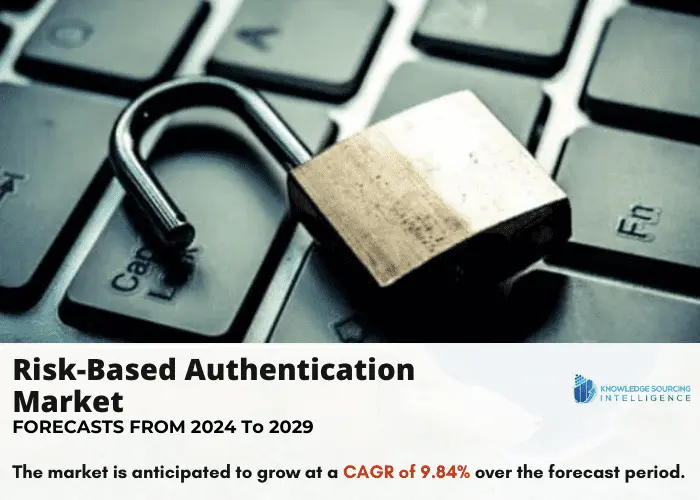
The risk-based authentication market was valued at US$3.478 billion in 2022 and is expected to grow at a CAGR of 9.84% over the forecast period to reach a market size of US$6.707 billion by 2029.
A security technique known as risk-based authentication (RBA) assesses several variables to establish the degree of risk related to a user's identity and actions during an authentication attempt. RBA evaluates contextual data, including device kind, location, and usage habits, to evaluate risk and modify authentication requirements. While low-risk activities provide smooth access, high-risk activities could require extra authentication processes, including multi-factor authentication.
By adjusting authentication procedures based on the perceived level of risk, this dynamic method improves security while striking a balance between security and user experience. RBA is extensively used in a variety of sectors, including e-commerce, online banking, and other digital services, to reduce customer friction during authentication procedures and lessen the possibility of increasingly complex assaults.
MARKET TRENDS:
Growing investments by end-users in improving the security of their systems are driving the adoption of advanced technologies by them. The rising incidence of security breaches is further fueling this need among end-users, thus driving the market for risk-based authentication solutions. The rapid growth of the communication and technology industry is a major factor driving the growth of this market, and it is expected to remain a major driving force for this market throughout the forecast period.
MARKET DRIVERS:
- Increasing system security awareness is expected to influence risk-based authentication market growth.
The major driver in the growth of the risk-based authentication market is increased awareness regarding system security. The risk-based-authentication systems provide real-time access to the threat data which enables the user to identify potential security hazards. The potential benefits of risk-based authentication include blocking suspicious users, protecting user data, reducing friction, improving password security, etc.
Furthermore, the growing security concerns worldwide while using the internet are rising. The rising number of privacy breach cases and hacking instances are increasing awareness regarding secure surfing over the internet. According to the World Bank, the number of secure internet servers per 1 million people was 9,975 in 2019 which significantly grew to 11,499 in 2020. Additionally, the Thales Data Threat Report 2022 -Federal Edition stated that 49% of the federal government respondents had reported that they had experienced a security breach. Furthermore, 19% of them had complete knowledge of where their data was stored. Thales is a provider of data protection, access management, and authentication to the US federal, civilian, state, and local government agencies. Thus, these breaches mentioned in the Thales Data Threat Report 2022 indicated rising security threats in the US which aided the growth of the risk-based authentication market.
- Rising utilization in various end-user industries is predicted to positively impact risk-based authentication market growth.
The rising end users in industries such as communication and technology, retail, BSFI, government healthcare, and many more are increasing the demand for risk-based authentication technologies owing to the rising security concerns. Furthermore, the rising need for connectivity for remote employees, partners, contractors, and other external users has increased due to easy access to technology. Hence, the volume of users needing access to important data and systems in the end-user industries is growing exponentially.
Moreover, governments all across the world are concerned about cyber security and data privacy in their respective countries. For instance, in July 2022, Belgium’s Foreign Affairs, Foreign Trade, and Development Cooperation reported malicious cyber activities that affected the sovereignty, security, and democracy of Belgium. The malicious activities targeted the FPS interior and the Belgian defence. Such incidents are raising concerns among the end-users regarding their cyber security. As a result, the risk-based authentication market is expecting growth in the forecast period.
MARKET RESTRAINTS:
The risk-based authentication (RBA) business is constrained in several ways, despite its advantages. First off, worries about the precision and dependability of risk assessment algorithms can prevent their broad deployment as erroneous positives or negatives could affect security efficacy and user experience. Furthermore, privacy laws like the CCPA and GDPR place stringent restrictions on data processing and gathering, which makes it more difficult to install RBA systems that depend heavily on vast amounts of user data.
Another obstacle is integration issues with old systems and the current authentication architecture, which are especially problematic for enterprises with complex IT infrastructures. However, some organizations, particularly smaller ones, may find the expense of installing and maintaining RBA solutions which includes training staff and making technological investments to be unreasonable.
The North American region is anticipated to hold a significant share of the market.
By geography, the market has been segmented into North America, South America, Europe, the Middle East, Africa, and the Asia Pacific. The North American risk-based authentication market is projected to grow owing to the presence of many market players in the region.
For instance, companies like IBM incorporated in New York, United States recorded a 3.93% revenue increase in 2021, and the company recorded a revenue of US$ 57.35 billion in 2021. IBM further specifies that the Software revenues increased by 5.3% in 2021. Additionally, the risk-based solution offerings by IBM help in differentiating the true users' fraudsters with IBM Security Trusteer Pinpoint Detect. These services and solutions in the North American region are aiding the growth of the risk-based authentication market.
Key Developments:
- In September 2023, at the Billington CyberSecurity Summit, RSA, the pioneer in security-first identity, announced that it will expand support for the Open Authentication (OATH) open standard. Government agencies can comply with important cybersecurity mandates such as those outlined in EO 14028, NSM-8, and M-22-09, among others by using RSA's open standards support and proprietary solutions.
- In April 2023, to streamline and expedite the security analyst experience throughout the whole incident lifecycle, IBM launched its new security suite. With a large investment in innovations throughout the portfolio, the IBM Security QRadar Suite offers a substantial development and extension of the QRadar brand, including all key threat detection, investigation, and response capabilities.
Risk-Based Authentication Market Scope:
| Report Metric | Details |
|---|---|
| Study Period | 2021 to 2031 |
| Historical Data | 2021 to 2024 |
| Base Year | 2025 |
| Forecast Period | 2026 – 2031 |
| Report Metric | Details |
| Market Size Value in 2022 | US$3.478 billion |
| Market Size Value in 2029 | US$6.707 billion |
| Growth Rate | CAGR of 9.84% from 2022 to 2029 |
| Study Period |
2019 to 2029 |
| Historical Data |
2019 to 2022 |
| Base Year | 2023 |
| Forecast Period | 2024 – 2029 |
| Forecast Unit (Value) | USD Billion |
| Segments Covered |
|
| Companies Covered |
|
| Regions Covered | North America, South America, Europe, Middle East and Africa, Asia Pacific |
| Customization Scope | Free report customization with purchase |
Segmentation:
- By Offering
- Software
- Services
- By Enterprise Size
- Small
- Medium
- Large
- By Application
- Cloud Application Security
- IoT Security
- Fraud Prevention
- Others
- By Deployment
- On-premise
- Cloud
- By End-User Industry
- Communication and Technology
- Retail
- BFSI
- Government
- Healthcare
- Others
- By Geography
- North America
- USA
- Canada
- Mexico
- South America
- Brazil
- Argentina
- Others
- Europe
- United Kingdom
- Germany
- France
- Spain
- Others
- Middle East and Africa
- Saudi Arabia
- UAE
- Israel
- Others
- Asia Pacific
- China
- Japan
- India
- South Korea
- Taiwan
- Thailand
- Indonesia
- Others
- North America